

As global food security intersects with the intelligent revolution, artificial intelligence (AI) is profoundly reshaping agricultural production and the operational models of worldwide food systems. Ahead of the 2025 World AgriFood Innovation Conference (WAFI), we sat down with Professor Aalt Dijkhuizen, Former President of Wageningen University & Research (WUR), Former President of the Dutch Topsector Agri&Food, and foundational architect of the “Golden Triangle” (government-industry-academia) innovation model, to discuss how AI is redefining the possibilities of agriculture and driving systemic change in global agrifood systems.
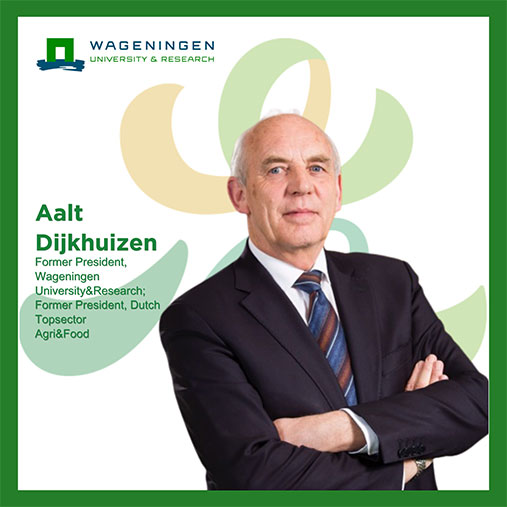
Figure 1
From cutting-edge research to real-world implementation, Aalt Dijkhuizen has always emphasized the power of technological integration and cross-sector collaboration—a philosophy that aligns with WAFI’s mission to transform agrifood systems through partnerships between government, industry, research, and practice. In his view, AI is crucial for improving productivity and efficiency, and hence a core driver in addressing global challenges such as food security and climate change.
Two Decades of Deep Roots: From Sino-Dutch Collaboration to AI Vision
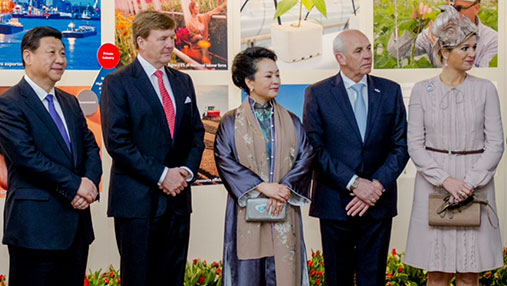
Figure 2: Aalt Dijkhuizen (Representing the Dutch Topsector Agri&Food) to Welcome President Xi and the First Lady for The State Visit to The Netherlands, alongside King & Queen of the Netherlands
Source: Aalt Dijkhuizen
Since first serving as an advisor to the Fujian Provincial Government in 2004, Aalt Dijkhuizen has been deeply involved in China’s agricultural development planning. He facilitated the establishment of the Sino-Dutch Agricultural Development Center (in Zhangzhou) and played a key role in launching KLM’s Amsterdam-Xiamen route, building an “air corridor” for cross-border agricultural trade. He was awarded Honorary Citizen of Fujian Province in 2007.
During his tenure as President of WUR (2002–2014), he led the signing of strategic agreements with China Agricultural University and Nanjing Agricultural University, creating a model of trilateral innovation collaboration between universities, government, and enterprises. In 2013, he helped establish the Sino-Dutch Dairy Development Center, which became an emblematic example of the “Golden Triangle” model applied in China. He also supported the set-up of an R&D center of China’s largest dairy company Yili (later renamed Yili Innovation Center Europe) on WUR’s campus, which continues to facilitate global university-industry partnerships and technology transfer.
What truly underscores his foresight is his keen insight into China’s strengths in AI. “China is strong in new technologies, such as AI. The Netherlands is globally recognized for its agrifood sector, leading the country to the 2nd largest exporter of agrifood in the world. So, combining China’s strength of AI technology and the Netherlands’ strength of in-depth domain knowledge and practical experience in agrifood could create an unprecedented winning team,” he stated. This vision has become the core logic behind his recent efforts to advance Sino-Dutch agricultural technology cooperation.
WAFI: A Global Platform for AI and Agricultural Innovation
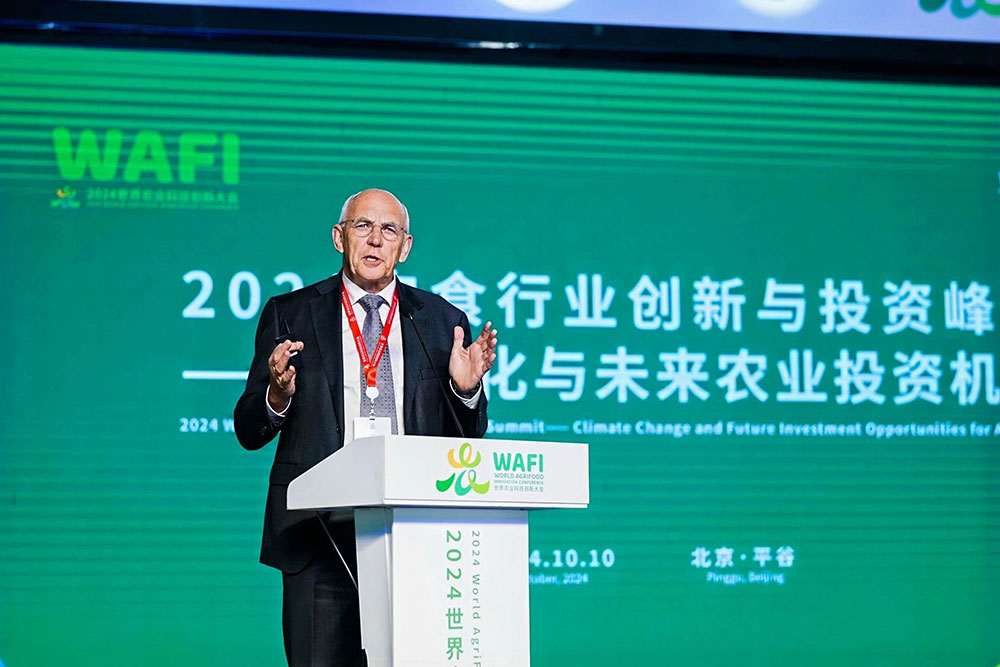
Figure 3: Keynote Speech from Aalt Dijkhuizen at WAFI2024
Aalt Dijkhuizen has been a significant contributor to WAFI’s global dialogue on agrifood innovation. During his keynote at the WAFI2024 Agrifood Innovation and Investment Forum, he underscored the transformative role of AI in addressing core agricultural challenges, advocating for AI-powered solutions that enhance productivity and efficiency, reduce environmental footprint, and unlock new frontiers in the future agrifood systems.
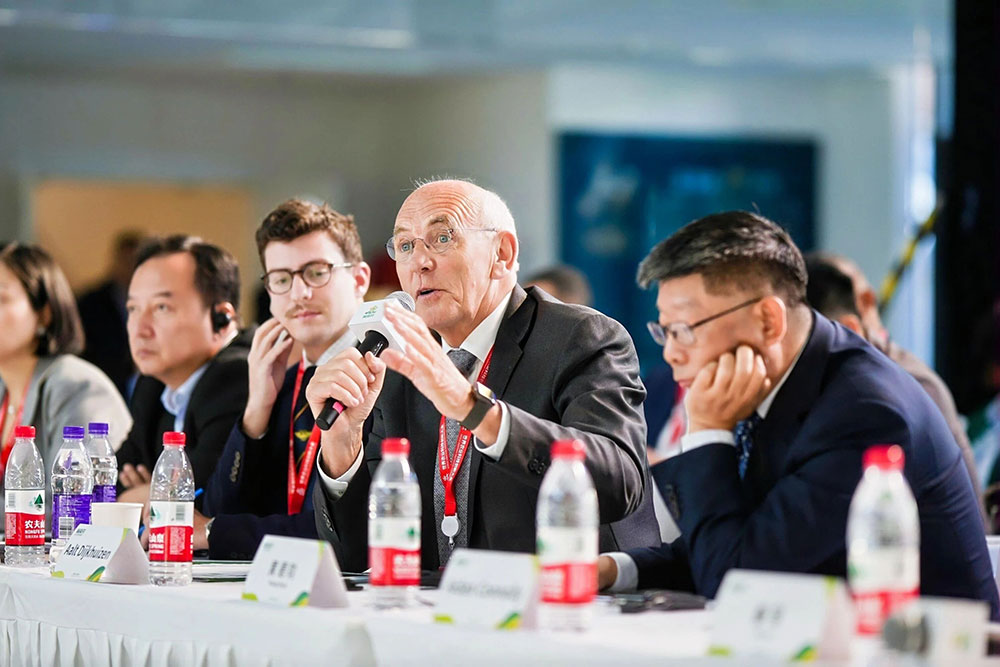
Figure 4: Aalt Dijkhuizen Presides as a Judge for the WAFI2024 Global Agrifood Innovation Roadshow, Evaluating Pitches From Leading Innovators in the Agrifood Sector
“Farmers and agribusiness companies realize that it is time to speed up, and they do,” he stressed. This sense of urgency led to his co-founding of the Agri-AI Business Club with Cynthia Zhu, specialist in Agri-AI and active on the integration of AI within the agricultural sector. The Agri-AI Business Club is a platform designed to empower agrifood companies to adapt and integrate AI technologies. By fostering continuous innovation, the initiative aims to build a new ecosystem that enhances both industrial competitiveness and global food security. The initiative has been well received across the sector, and the club is planning a visit to China in November 2025 to deepen AI application exchanges and explore collaboration opportunities.
In-Depth Dialogue: How AI is Building Resilience into Agrifood Systems
On key trends and opportunities brought by AI
“AI is reshaping agriculture across three dimensions: precision farming, predictive management analytics, and full supply chain optimization,” noted Dijkhuizen. He elaborated that rapid AI advancements are transforming agrifood systems through technologies such as autonomous machinery, AI-driven early pest and disease detection, and smart irrigation integrating weather and soil data. “These innovations increase yield, reduce cost, improve quality, enhance sustainability, and elevate consumer satisfaction.”
On the urgency of building resilient agrifood supply systems
“Food shortage remains the single most important factor affecting people’s livelihoods—and it directly leads to social and political instability,” Dijkhuizen emphasized. He reflected on the 2007/08 food crisis, which triggered a spike in global food prices and widespread unrest. Today’s system faces multiple pressures: rapidly growing demand, supply chain disruptions, climate volatility, and regional water scarcity. What worries him most are weak points in supply chain resilience and resource constraints that threaten production stability.
On initiatives to strengthen the global government-industry-academia ecosystem
Under the “Golden Triangle” framework, Dijkhuizen proposed that WAFI prioritize several initiatives: launching global innovation incubators, creating cross-border fellowship programs for young scientists and entrepreneurs, and establishing an open agricultural data exchange. “In all cases, it is crucial to involve the private sector.”
These forward-looking recommendations align closely with ongoing efforts at WAFI. Initiatives such as the WAFI World University Student Innovation & Entrepreneurship Competition and the Global Agrifood Innovation Roadshow are already creating platforms for young talent and startups to connect with academic and capital partners. Planning is also underway to launch an innovation incubator that systematically promotes technological innovation and industrial application.
The potential of this innovation model is rooted in the complementary strengths of China and the Netherlands. “China is strong in new technologies such as AI,” Dijkhuizen observed. “The Netherlands, as the world's second-largest exporter of agrifood products, brings decades of domain knowledge and practical experience. Combining these strengths can offer unique solutions for global agrifood transformation.”
On achieving “Zero Hunger” through collaboration
“No single company or country can do this all on its own, so collaboration is crucial,” he stated firmly. Investment must be directed toward exchanging people, data, knowledge, and technology. “In that respect AI could (and will) be a game-changer to all of us.”
On expectations for WAFI2025
“I hope WAFI2025 becomes a platform for tangible change,” said Dijkhuizen. He recommended focusing on AI and robotics integration in crop and livestock systems, farmer co-developed AI management tools, and real-world success stories. As digitalization in agriculture accelerates, initiatives like the Agri-AI Business Club are helping facilitate knowledge sharing and network building. He looks forward to deepening this exploration during his November visit to China.
Acknowledgments
We extend our sincere gratitude to Professor Aalt Dijkhuizen for sharing his profound insights. As a key promoter of Sino-Dutch agricultural collaboration and the pioneering mind behind the “Golden Triangle” model, his extensive experience and forward-thinking perspective offer invaluable vision for understanding the future of AI in agriculture.
This dialogue not only explored the pivotal role of AI in transforming global agriculture but also highlighted WAFI’s core mission as a platform where cutting-edge technology meets industry practice. We remain committed to gathering global wisdom and driving systemic change, placing AI, sustainable agriculture, and food resilience at the heart of international dialogue.
If you are interested in the WAFI Dialogue series or the WAFI2025 conference, please contact us at office@wafiforum.com for more information and participation details. We welcome innovators, practitioners, and policy makers from around the world to join us in exploring viable pathways for agri-food system transformation.
WAFI Dialogue serves as both a key pre-event and regular activity for the World AgriFood Innovation Conference (WAFI). It amplifies voices of global scientists, educators, entrepreneurs, and youth committed to "Innovating Agriculture, Sharing the Future."
WAFI is a global exchange platform driving agrifood systems integration and transformation. It facilitates policy-science-industry interaction and cross-sectoral dialogue to create healthy, resilient, inclusive, and sustainable agricultural futures. Since its inception, WAFI has gained international recognition as one of the world’s top three agrifood events.
WAFI2025 Conference will convene under the theme "Resilient Food Supply For Agrifood Systems Transformation" from October 12-15, 2025, in Pinggu, Beijing. The conference will feature an opening ceremony, plenary sessions, thematic forums, parallel meetings, side events, innovation showcases, and an expo.


Warning: Beware of Scammers
The World AgriFood Innovation Conference is committed to protecting the privacy of our Clients. Recently, we have received reports of individuals posing as conference staff and attempting to obtain money by selling fake lists of attendees or other sensitive information. We hereby declare for the record that the World AgriFood Innovation Conference will never sell information about any attendees or partners. We strictly abide by relevant national laws and regulations, and give your personal information the highest level of protection.
If you receive any email or phone call claiming to be from the Conference asking you to pay for data or provide personal information, please be vigilant and do not believe it; And check with the Organizing committee in time [work@wafiforum.com]
Know More